
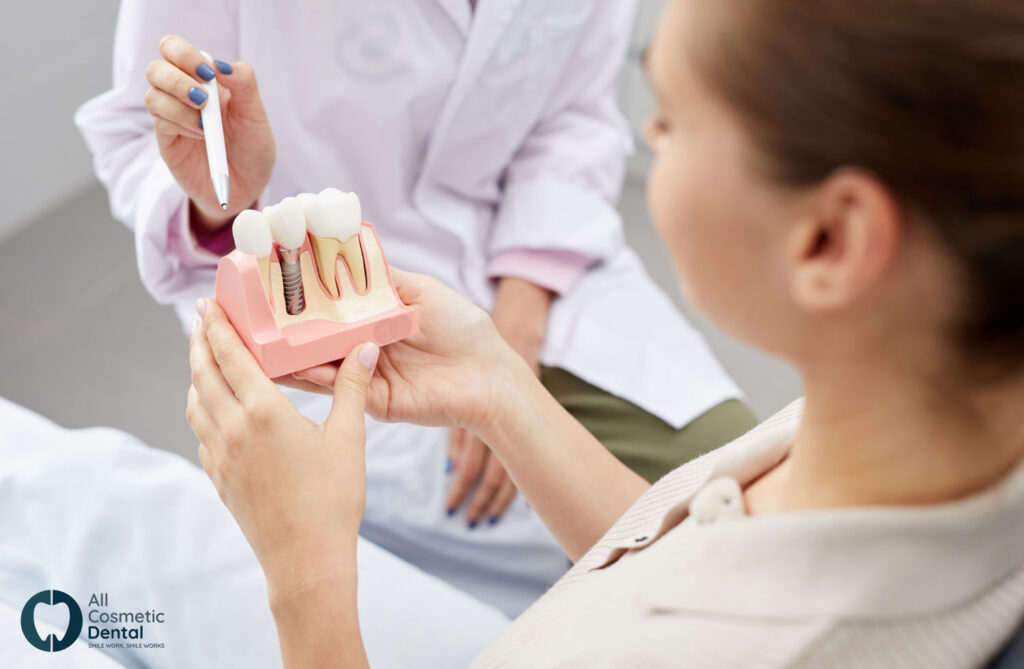
The vast discipline of dentistry is continuously growing with its unbounded potential for tapping into innovations and efficiency. With constant advancements in technology and the need for social adequacy, experts have been incorporating dental implants as a means of a modern tooth replacement mechanism. Despite dental implants possessing high success and survival rates, the clinical success of a dental implant can only be possible with the implementation of precision, accuracy, primary stability, and affluent integration. All of this requires efficient skills from a professional. Dental implant surgeries help the dentist place implants that meet all of these requirements to ensure the long-term therapeutic and aesthetic benefits of this dental prosthesis.
What is Dental Implant Surgery?
Dental implant surgery is a procedure that aspires to replace missing, grossly decayed, or heavily diseased teeth. This is a highly delicate procedure that involves placing a metal post, cylinder, or screw into the jawbone to assist in supporting the new artificial teeth as well as to stimulate new bone growth.
Dental implant placement and positioning are crucial for the success of the dental implant. Since this is an invasive procedure, dentists are encouraged to perform the surgical process with as much explicit detail and intent as possible.
When the treatment planning for dental implant therapy is afoot, one of the biggest challenges practitioners face is the indecisive impasse to employ either free-hand (non-guided) or template-guided dental implant surgery. As with many other clinical considerations, the answer lies in the contingency of the patient’s unique dental needs and circumstances. Freehand surgery, in which a flap is raised and the implant is placed based on the available diagnostic history, is a cost-effective method of placing dental implants. Guided surgery, on the other hand, is a highly precise dental procedure whereby the osteotomy is fabricated through a digitally designed and printed surgical guide. With this method, the practitioners are awarded more control and precision while placing a dental implant.
Know more about Dental Implants by referring to our complete comprehensive guide on it.
Free-hand or Non-Guided Dental Implant Surgery
Non-guided dental implant surgeries are common practices delivered during implant placements. In free-handed surgery cases, periapical and panoramic radiographs are used to assess the bone available for implant placement as well as to evaluate the health of the surrounding anatomy.
Periodontal probes and callipers may be used to measure the bone height and thickness of the ridge. The surrounding teeth can be used as guides to place the dental implant, noting that the implant is placed at least 1.5 mm from any neighbouring teeth and 2 mm apical to their cementoenamel junction. The available CBCT scans give the practitioners a clear idea and estimate of the characteristics of the oral cavity for proper assessment of dental implants.
Guided Dental Implant Surgery
Guided dental implant surgery is a highly precise dental procedure that utilises advanced machinery and imaging technology to “guide” or aid the dentist in manufacturing and placing dental implants more efficiently and accurately.
In guided surgery cases, CBCT scanning and digital intraoral impressions are used to generate a virtual representation of the patient’s internal oral anatomy. This highly vetted method of surgical intervention helps dentists develop a digital treatment plan for the patient for dental implant placement. A surgical guide is created that takes control of the osteotomy and adheres to its precision principle for preplanned implant positioning and placement. The depth, angulation, and mesial-distal and buccal-lingual location of the implant osteotomy are recorded with great accuracy by titanium sleeves situated within the surgical guide.
Guided surgery not only enhances precision but also minimizes tissue trauma, leading to faster recovery and improved comfort for the patient. By utilizing a pre-designed surgical guide, dentists can achieve optimal implant positioning, ensuring long-term stability and success. This advanced technique is especially beneficial for complex cases where traditional methods may pose challenges.
Using digital data from a CBCT scan, a surgical template is obtained immediately if corresponding software is available. Fully-guided surgery is indicated for flapless surgical experience and may also be combined with open surgery if further elective surgical procedures such as local Guided Bone Regeneration (GBR) become necessary to perform. If the dentist is considering guided dental implant surgery as the mode of implant delivery, the oral capacity of the patient has to be pre-evaluated since more space will be required to position the drills in the sleeves of the template.
With the popularity of dental implants and their place as a staple for tooth replacement, guided implant surgery can offer various benefits to the dentist for achieving the accuracy, safety, precision, and predictability of the dental implant. Despite these outstanding qualities, guided dental implant surgeries are rarely used in clinical applications. With more than 2.1 million dental implants sold each year, guided dental implant surgeries offer reduced chair time, reduced cost, and significantly superior efficiency. Instead of having a CAD/CAM guide produced, the camera-based navigation system instantaneously computes and displays the position of the implant drill relative to the planned position, enhancing accuracy and efficiency.
What is Non-Guided Dental Implant Surgery?
Non-guided dental implant surgery involves placing implants without using a pre-made surgical guide. The dentist relies on their experience and real-time evaluations during the procedure. While effective in simple cases, it may have higher risks of misalignment compared to guided surgery, which uses advanced technology for precision.
What Is the Cost of Guided Implant Surgery?
Guided implant surgery typically costs between $3,000 and $6,000 per implant in Australia. While it is more expensive than non-guided surgery, its precision reduces complications and improves long-term offering excellent value for patients seeking reliable outcomes.
The Takeaway
Dental implants, if placed correctly, can make the world of a difference in the patient’s lifestyle. It is recommended that in every dental implant placement guided surgery take the peak priority as it can result in the robust placement of dental implants with a higher rate of survivability. Virtual state-of-the-art technology helps dentists build comprehensive treatment plans for the patient elected for dental implant placement. Template-guided drilling procedure leads to significantly higher accuracy, however, the operator may decide what is best for their patient.
Looking to restore your oral functionality with a confident smile? Your friendly experts at All Cosmetic Dental are here to help you! Contact us today to schedule your initial consultation and learn more.